
Technology, designed into the architecture.
N-Home A/V is an integrated technology design and installation studio working across Central Pennsylvania and the Denver metro. We design environments — for modern homes, considered businesses, and the builders, architects, and operators shaping both. Lighting, audio, networking, security, climate, and control, planned together as one system instead of stacked as separate purchases.
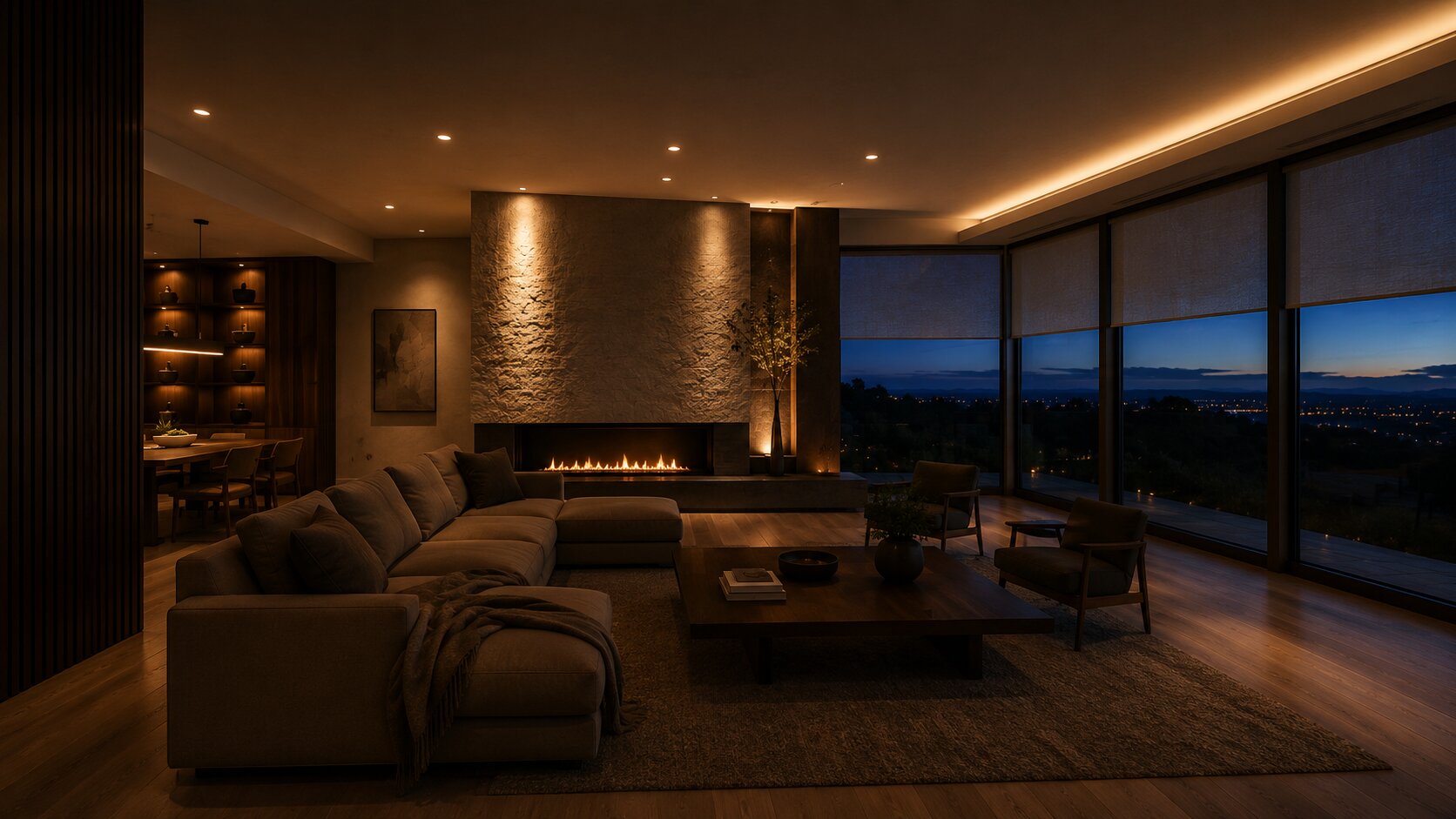
A home or a building should feel thought about.
The premise is simple, and most of the industry skips past it.
The places people actually want to spend time in — the boutique hotel that gets the lobby light right at dusk, the restaurant where the music meets the room without overpowering it, the residence where a single keypad turns a great room from morning into evening — those places weren't assembled. They were composed. Lighting, sound, climate, materials, and control all sit inside the same idea, designed together, rather than stacked on top of each other by separate trades on different days.
Most of what passes for "smart home" or "AV install" is the opposite of that. A doorbell from one company, a thermostat from another, a TV mount from a handyman, a network kit from Costco, four apps that don't talk to each other, and a homeowner trying to make it feel intentional in retrospect. It rarely does.
We work the other way around. The systems that shape how a space feels — lighting, audio, networking, security, climate, shading, control — get designed together, before the wires go in, with the architect and the builder in the room when it matters. The technology disappears into the architecture. What's left is a building that responds to how you actually use it.
Three things that set the work apart.
Bi-coastal exposure, local execution
We split our time between Central Pennsylvania and the Denver metro. That dual-market vantage matters. Cities like Denver and Austin are reshaping what residential and commercial environments look like — technology, architecture, hospitality, and lighting design treated as a single conversation rather than separate trades. We bring that sensibility back to every project we touch in PA, and we apply it natively to our Colorado work. Most local Central PA installers approach smart homes from a strictly technical or DIY lens. We don't.
Designed as systems, not assembled as products
We don't sell devices. We design environments — and the technology is how the environment behaves. Lighting scenes don't exist in isolation; they integrate with audio, with shades, with climate, with the way a homeowner actually moves through the day. Networking isn't a router on a shelf; it's the foundation every other layer depends on. A camera isn't a camera; it's part of an access, lighting, and security composition. The systems are designed to feel like one decision, even when they involve a dozen brands underneath.
Built around real architecture and real users
The best technology install is the one a homeowner forgets is there. The best commercial install is the one the operator stops thinking about because it just works. We design with that as the goal — keypads where doors actually open, scenes that match how a family actually lives, networks sized for what's coming next, infrastructure built to outlast the trends. The technology serves the building and the people in it, not the other way around.
TyGerr Farmer.

N-Home A/V was founded by TyGerr Farmer — a multidisciplinary operator who brings a perspective most AV integrators don't have.
TyGerr's background spans branding, web development, marketing, and user experience design alongside the technical disciplines you'd expect of a systems integrator: AV integration, smart home automation, enterprise networking, low-voltage infrastructure, and access control. That combination is rare in this category, and it's deliberate. The way a homeowner experiences a Lutron keypad at the end of an exhausted day is, fundamentally, a UX problem. The way a business owner reads a security dashboard is a design problem. The way a builder presents the technology layer to prospective buyers is a brand problem. The technology underneath is only as good as the way people actually encounter it.
That cross-disciplinary fluency informs how every project gets scoped. Layouts, control surfaces, and naming conventions are designed with the same care given to the wiring underneath. Documentation reads like documentation, not like a parts manifest. The handoff at the end of a project sounds like a conversation, not a training session. The point of the work is to make a space behave the way the people in it expected it to — and that goal pulls from every discipline it takes to deliver it.
TyGerr operates the business between Harrisburg, Pennsylvania and Denver, Colorado — and the influence of both markets shows up in the work.
The crew on the work.
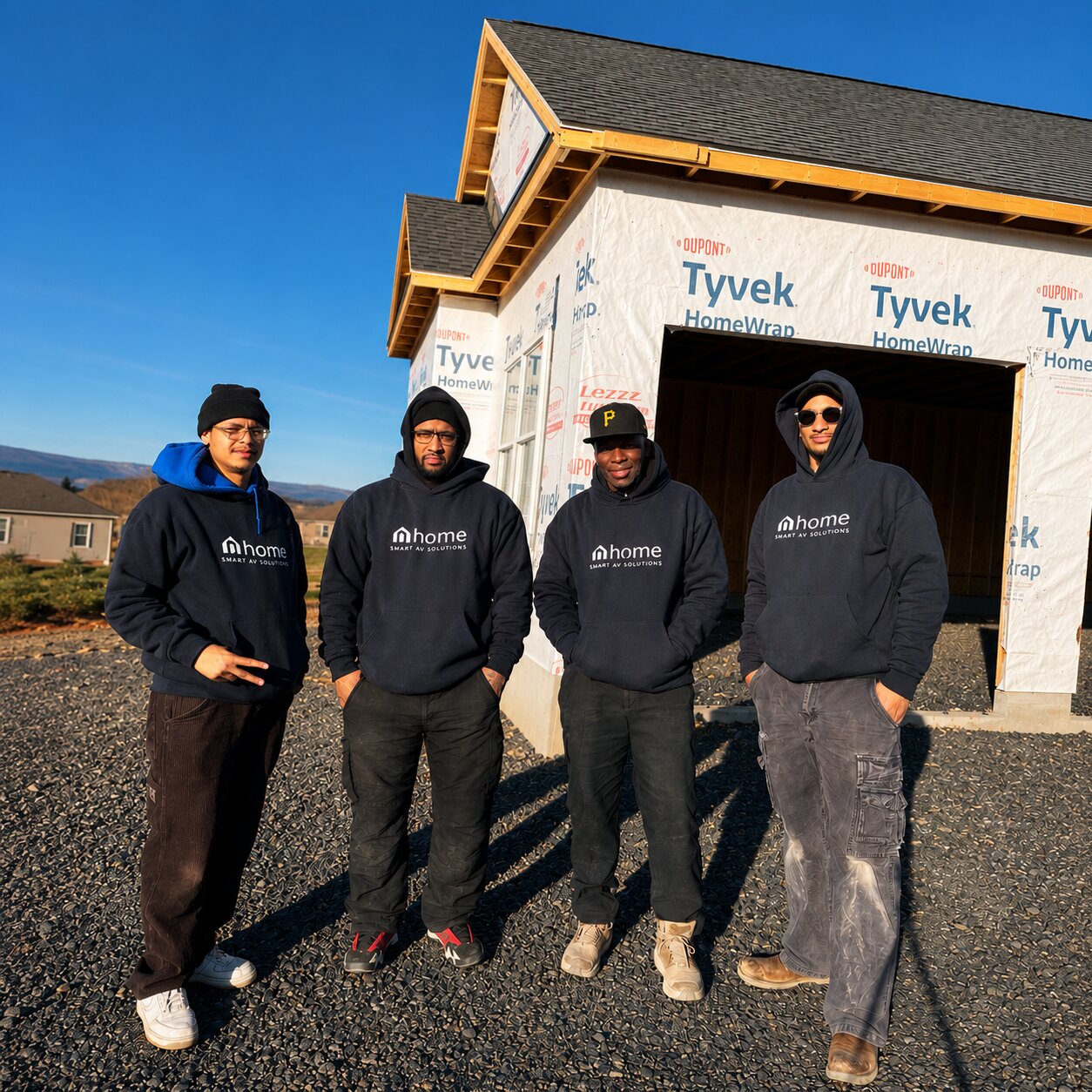
The work doesn't happen because of one person. It happens because of a small crew that shows up — to job sites, framing walls, finished homes, and commercial buildouts — and installs the work cleanly. This is them, on site at a recent new-construction project.
Two practices, one standard.
We work across both residential and commercial environments — and the work informs itself in both directions. The discipline of a commercial enterprise network deployment shows up in the residential infrastructure we install. The architectural sensibility of a thoughtful home shows up in the commercial spaces we design.
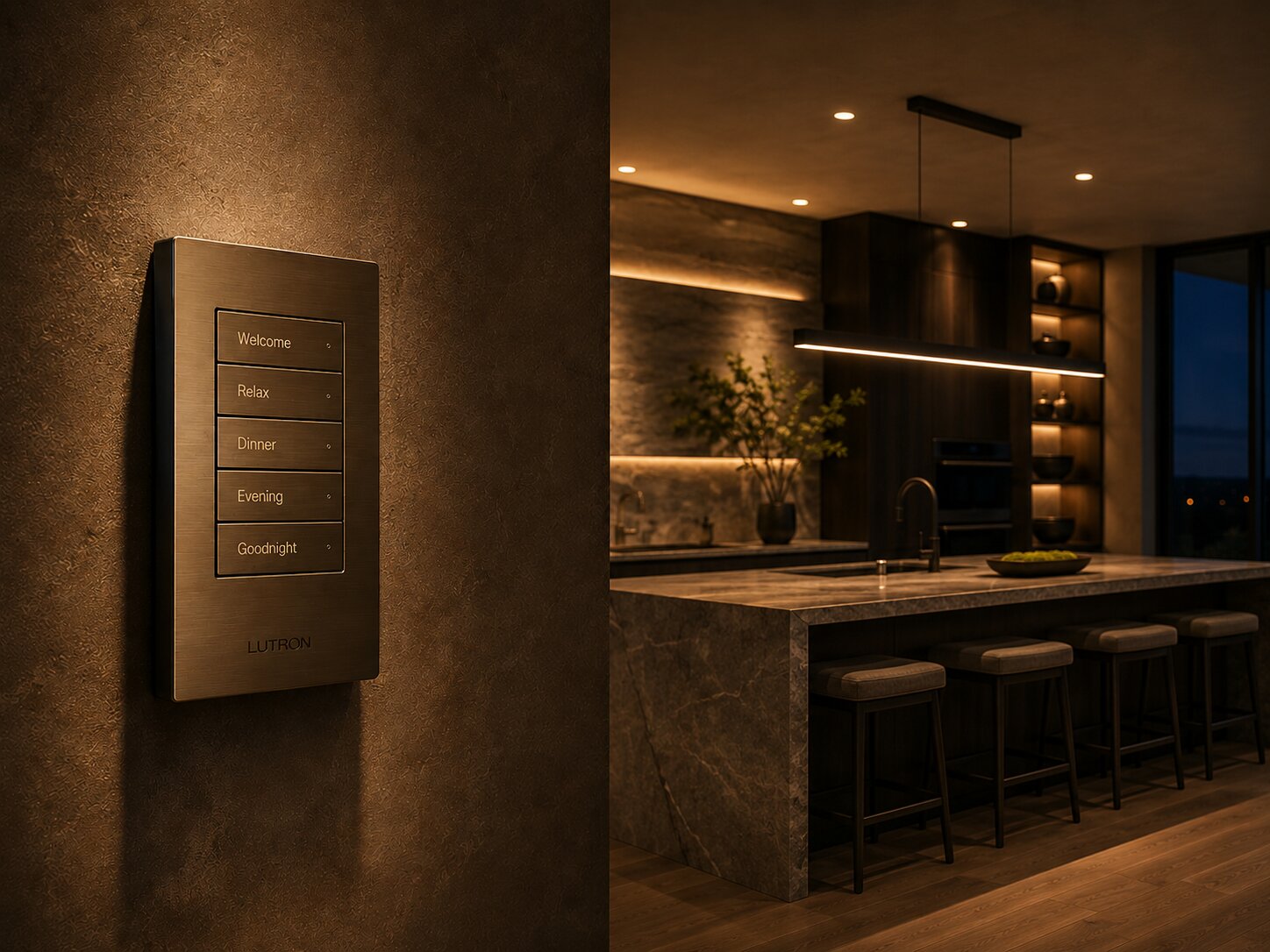
Homes designed around how people actually live.
- Architectural lighting design — Lutron Caseta, RadioRA 3, and HomeWorks systems with layered ambient, task, and accent fixtures, warm-dim LEDs, scene programming, and motorized shade integration.
- Smart home automation — Josh.ai voice control, locally-processed and subscription-free, integrated with lighting, audio, security, climate, and access.
- Whole-home audio — Sonos and Sonance architecture-first installations with Apple AirPlay 2 and HomeKit integration.
- Home theater & advanced AV — Dolby Atmos design, Sony and JVC projection, calibrated immersive systems with proper acoustic treatment.
- Builder & architect collaboration — pre-wire planning during construction, scope coordinated with the GC, and active partnerships with established Central PA homebuilders including McNaughton Homes.
- Outdoor environments — outdoor-rated displays, Sonance Landscape audio, exterior lighting, and network coverage built for full-season weather.
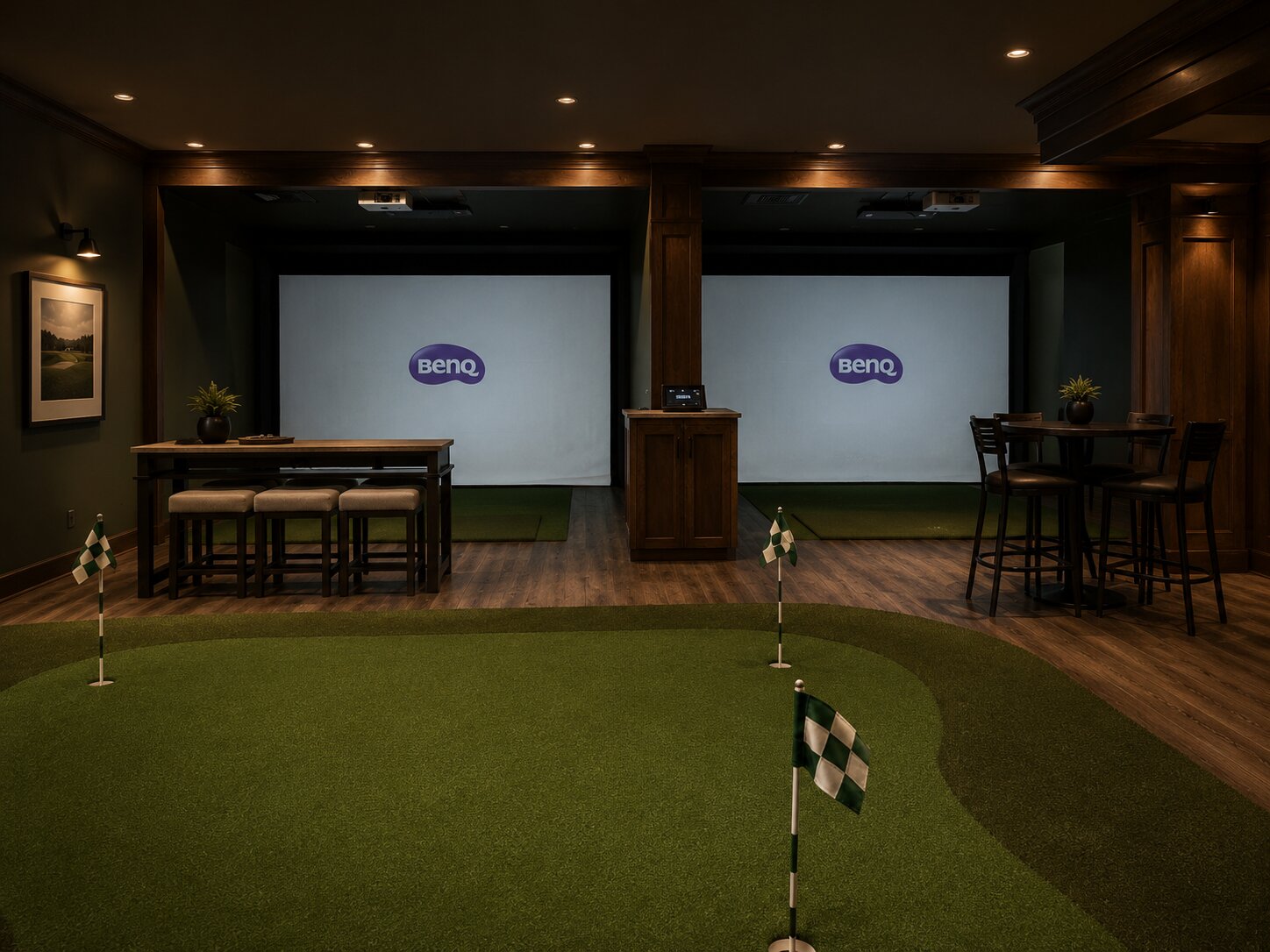
Operational technology for modern businesses.
- Enterprise-grade networking — Ubiquiti UniFi infrastructure with structured Cat6/6A cabling, PoE switching, VLAN segmentation, and centralized local management.
- Surveillance & access control — UniFi Protect camera deployments with on-site NVR storage, ELK alarm panels, and card-based access control for staff entry points.
- Structured cabling & infrastructure — IDF/MDF buildouts, network closet design, conduit planning, and the foundational work that determines whether a space's technology runs reliably for the next decade.
- Multi-zone audio & AV — distributed audio for hospitality and retail environments, conference and presentation systems, digital signage infrastructure.
- Mission-critical installations — security and infrastructure work for non-profits, public-facing facilities, and operationally sensitive environments where the system genuinely cannot fail.
- Operational technology systems — integrated environments for businesses where lighting, security, networking, and control all need to behave as one platform rather than five separate ones.
Buildings should respond to the people inside them.
The technology layer in modern homes and businesses has been treated, for too long, as something you tolerate — a stack of products that have to be charged, updated, troubleshot, and worked around. The industry has trained homeowners and operators to expect that. We don't accept the premise.
The buildings we want to spend time in — the ones that feel right at 7am and right again at 9pm, the ones that respond to how you actually live or work, the ones that stay quietly competent for a decade — those buildings have technology that was designed to disappear. To be felt, not seen. To make the architecture better instead of competing with it.
That's the work. That's what we're building.
Let's talk about your project.
Whether you're building a home, designing a business, or planning a renovation that should have happened five years ago — we'd rather start the conversation early. The earlier the better.